Search This Blog

Showing posts with label garden activites. Show all posts

Monday, March 28, 2016

How I Made A Trellis

How To Make A Trellis From Scrap Wood 


Rose On Trellis March 24, 2016

It started out when our Rose that was climbing up the side of the house decided it wanted to grow the opposite way.  Oh I trimmed it every year, but it still grew towards the ramp.  I also wasn't happy about how the house looked with the lattice on the side.  Someone told me that it looked like my house had wings.  They weren't all the pretty either.  So  I decided to allow the Rose to do what it wanted to do and made a trellis for it to climb on.


The Rose in the Wooden Barrel.  See opening on the bottom of the house...
that is where the rose decided that it was going to send the tap root to.

At first we thought that it would be easy to dismantle the old wooden barrel that a neighbor gave us to uses many years ago when she was moving and couldn't take it with her.  That was further from the truth as one can get.  Oh, taking down the boards around the planet was the easy part because they were so decomposed.  Digging out the Rose was an entirely different story.  The main root grew and grew and grew and it is still right where it grew and we cannot find the end.  It grew right down under the house and we cannot get to dig anymore under there, so there is where it stays.  

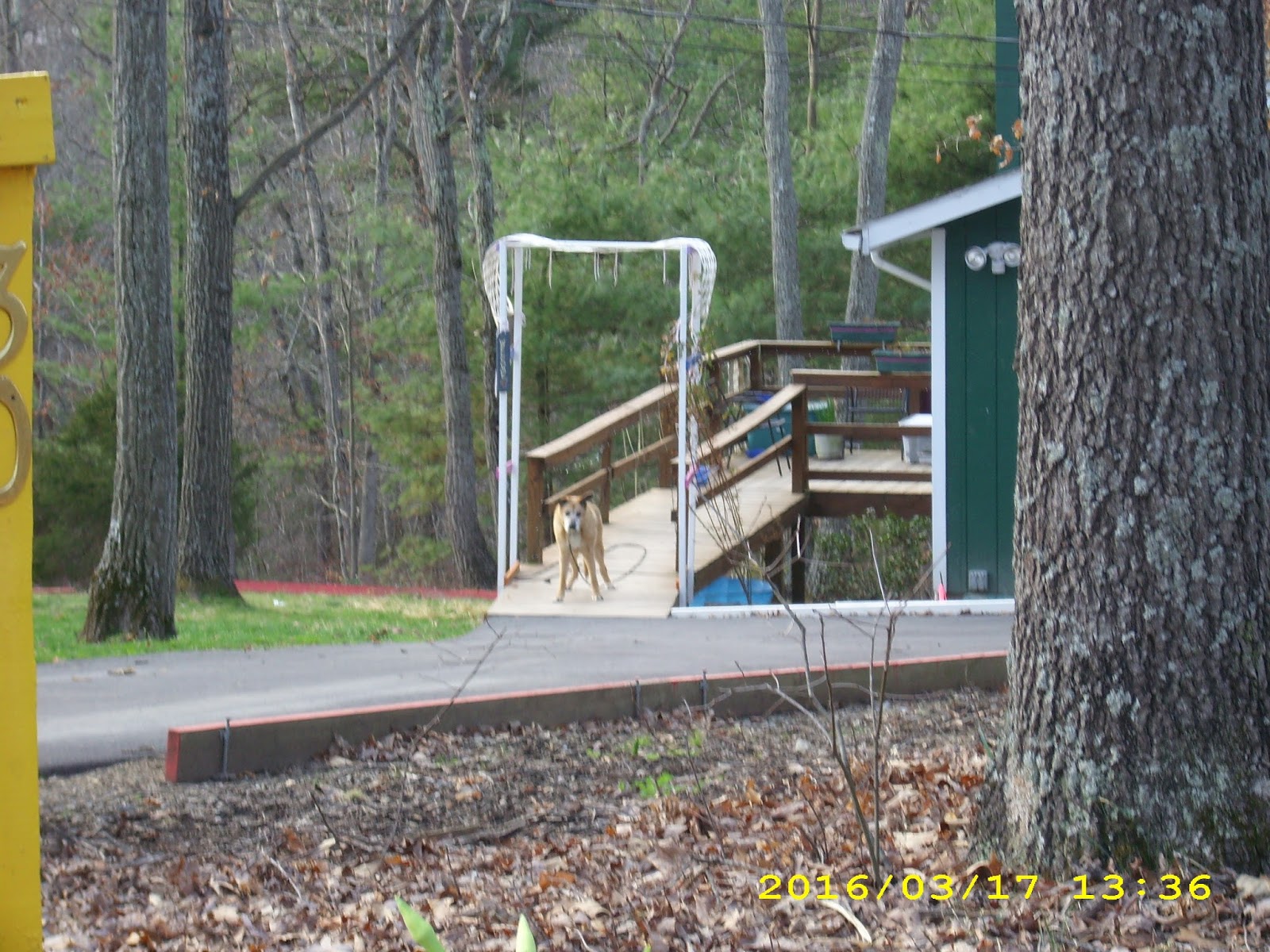
So we kind of leaned the Rose up against the trellis.  It likes it there and is coming back pretty good as you can see on the top picture.

I went around the yard and under the crawlspace and under the back deck looking for things that I could use to make an easy and pretty Trellis.  I found a few 2x4's and some old wood flooring planks that were left over from making our kitchen counter top with.  I measured the deck or ramp at the point where it was the most straight.  It does curve before the banisters start.  So I had to get it just right. 


All parts painted and ready to be put together.

I figured out how deep I needed to make it and measured the boards and then cut them.  I want birds and bees to nest and feed in the Rose and on the trellis so I pained the boards bright colors.  The Rose is a bright Pink.  I don't think it really matters because when the Rose gets full you will not be able to even see the trellis.  During the winter months you will though and I painted them to match the colors in my Raised Gardens at the top of my lot.  We have an acre but only want to use the top portion.


Duke
After painting the boards and allowing them to dry for a day or so, I started to assemble them.  The boards all looked very pretty.  I had to find something to go over the top so that the Rose will climb over.  I wish that I could put another climbing plant on the other side but my dog will tear that out the first time he runs to greet his Daddy when he comes home or after a cat that comes within his reach.  Oh he doesn't hurt them or chase them.  He loves them and they love him and the cats are always sniffing in his ears or rubbing up against him.


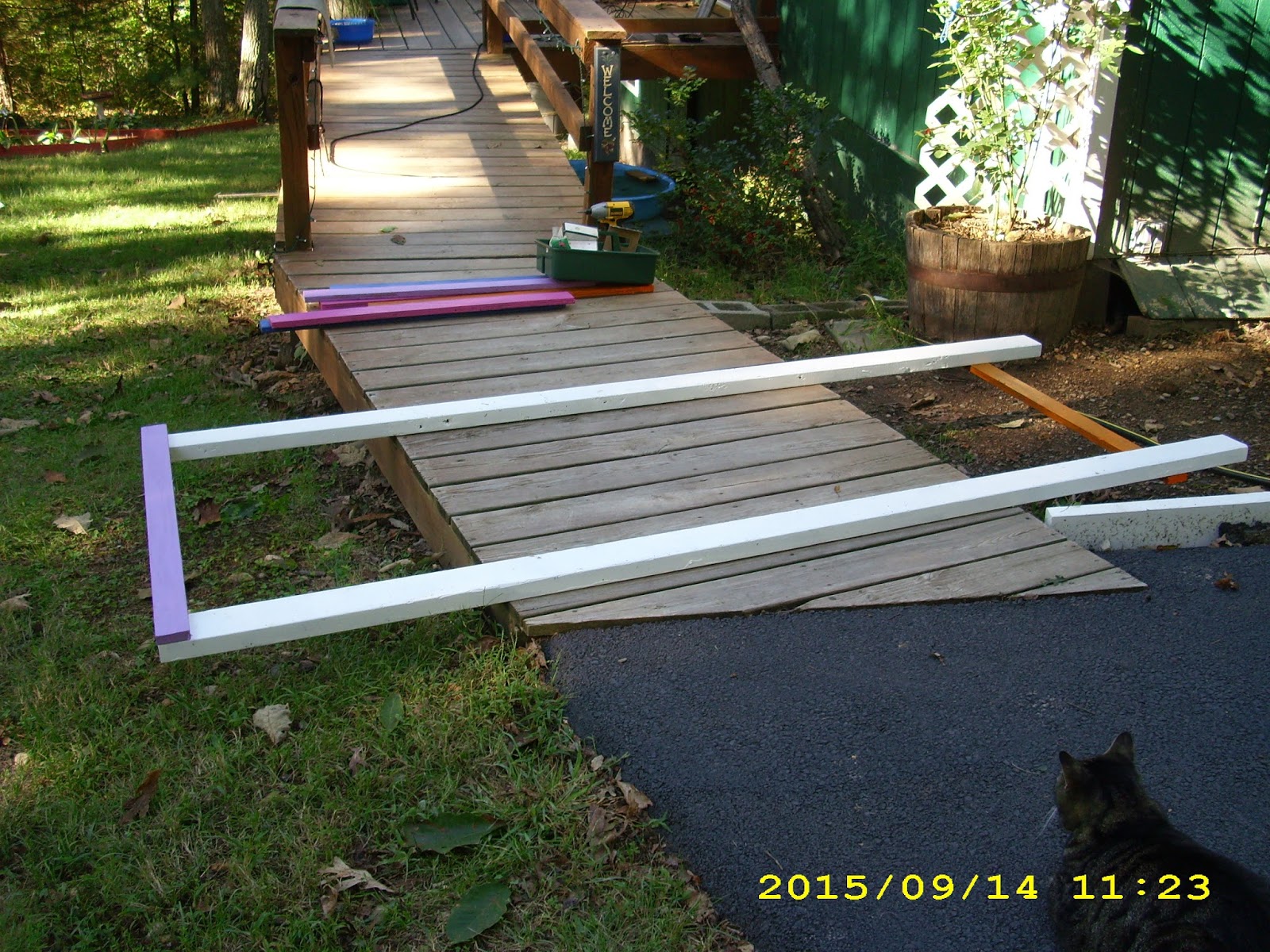
Skeleton of one side of the Trellis.
To put the board together I laid them down on the deck and screwed them together one side and then the other side.  This is where I needed someone to help me.  After screwing them together I needed some one to hold the sides up to the deck so that I could screw them into the sides below the floor.  Man was that so difficult!  The deck wood was pressure treated and it was deck wood.  It is a special kind of wood used for anything made to be out in the weather.  It was like cement!  I am not making it bigger than what it is.  


Side is ready to be put up.
My husband even tried hammering nails into it.  I hammered nails into it and the nail head was imploding into itself.  Nope not bending and I could understand that.  I even drilled starter holes in the wood and broke off two drill bits.  Thar wood is like petrified.  We think that we got enough steel in it to hold it. Crazy!

We finally get the sides up and still I have not figured out what I can use for the top.  Oh and my husband is tall and I had to make the trellis high even that he would not hit his head on it.  I had t get on a step stool for me to reach the tip of it.


Here I am tying down the lattice.
We had. still do, pieces of white plastic lattice leftover and so I screwed two pieces together in the center and laid it across the top of the sides of the trellis.  I had to put some leftover PVC pipe alongside of that to keep it from falling in.  I think that I did a pretty good job as we had 42 inches of snow fall during the winter....all at once and it is still standing.

When doing projects at our house, we really need to get creative.  We don't have a whole lot of money and I don't just up and throw things away.  I am resourceful and I like to recycle and re purpose things.  

That's How Gardening is On Misty Acre!


Tuesday, March 22, 2016

March 2016 Garden At The Allen Home

Gardening At The Allen Home


Survey of Gardens In The Lower Yard

This year we start off with surveying our gardens. Everything has fallen into disrepair here this year.  We need to do lots of things, ...well not really lots but more time consuming. Everything around here is time consuming and it all requires that nature cooperates with us.  As you can see all the boards that surround our various garden plots in the lower yard need reset.  We cannot do this yet as there is more winter weather heading our way.  


The Vegetable Gardens

Last year we knew that a few of these would be needing some extra tender loving care.  We had already gotten the boards that need the most replacing and painted before winter hit.  Now we just had to cut them to the right size and paint them.  We cut them, but as yet it has been too cold and wet to paint.  The wind doesn't help either.  Nature just is not cooperating with us this year so far.  It is supposed to be a balmy 70 degrees in the next day or so, but it may bee too windy.  I did some painting last year when it was windy and I think that I got more paint in the woods than on my project.  So I will just wait it out.  I was hoping to try growing some colder weather vegetables this year, but that my not happen. 


Jonas, The Snow Storm


Jonas, The Winter Storm of 2016


Nature played a trick on us this year.  She sent in a freak snow storm and the weatherman named it Jonas. That storm dumped 42 inches of snow on us in a couple of days time.We couldn't get out our front door without trying to shove it open enough to get start shoveling. It was like a nightmare.  I have pictures on a deer coming to play with my dog Duke that very morning before the snow started coming down that evening. The weatherman only called for between 18 inches and 30 inches.  We got socked. It took 2 months before it all melted.  


Two Out Of One

Some work to be done.  The yellow raised garden is literally falling apart.  I mean that the boards are rotting enough that the nails have just about gone right through them.  It will not be too difficult in taking that raised garden apart.  We have no more use for those boards and found other boards to use and also bought two last year for another garden that we didn't make.  Boy do making gardens get addicting.  I need to stop that, but this one is a fixer upper.  With the boards that I marked and cut we will be able to make two new raised gardens out of the one. They will be smaller, but more manageable than the one long one.  That is going to take the most time and will be complicated.  We are waiting for the weather to cooperate so that I can paint them.


Spring Has Sprung

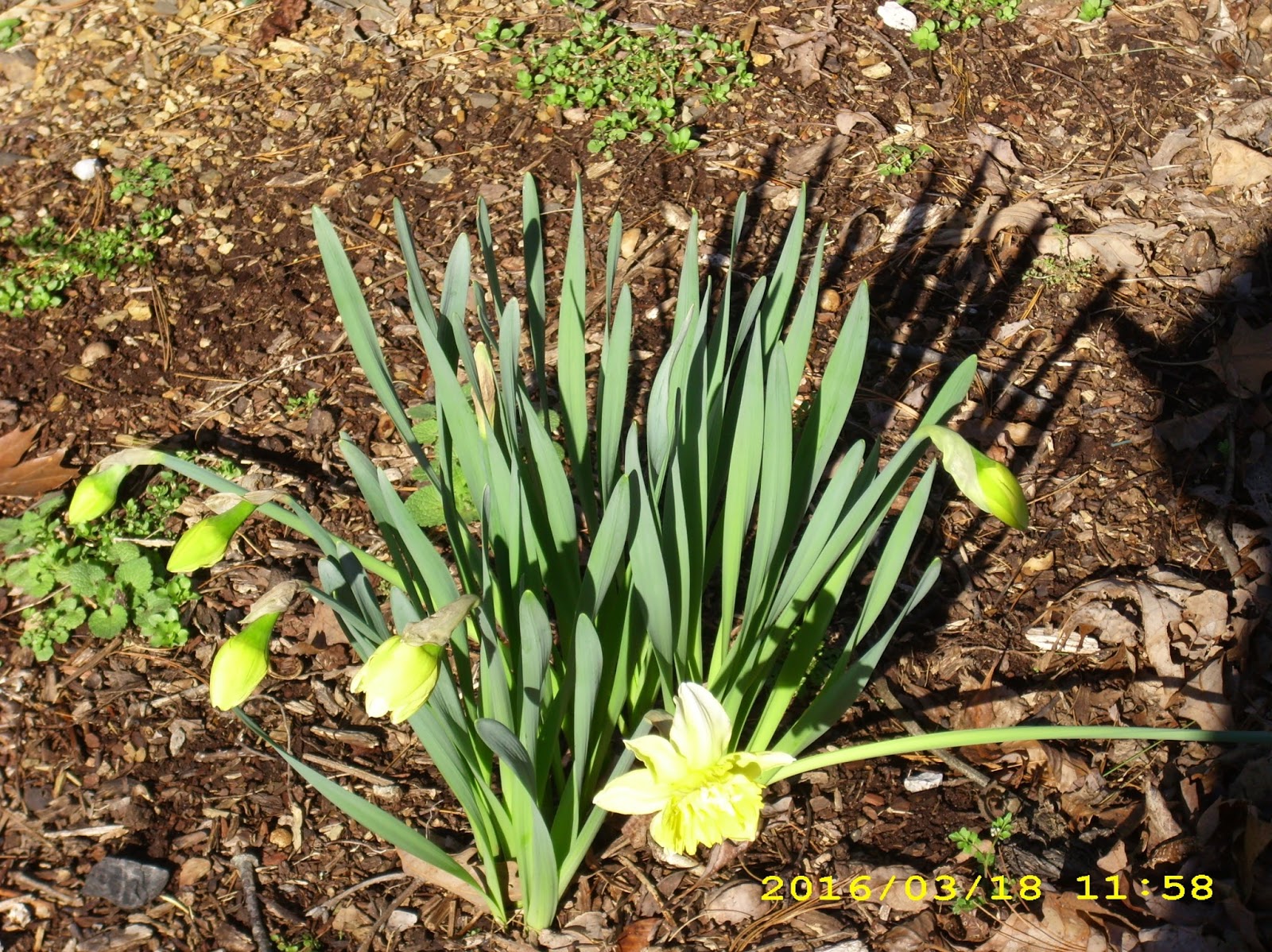
Due to the high volume of snow that we had and the longevity of it being here most of my flower bulbs were stunted.  I had many Irises planted in one garden that most of them aren't even peaking out of the ground.  So to end this I will leave off with a group of Daffodils that I took a picture of a few days ago.


Friday, April 24, 2015

Black Walnut Tree Poison and Garden Activites Late April to Early May


Did you know that the Black Walnut Tree produces a chemical that is very toxic to some vegetable plants?  I did not know this until I was reading my Gardening Catalog for the month of May.

The trees produce a chemical called "juglone" into the soil up to 50 feet surrounding it.  It will make your tomatoes yellow and possibly causing their death.  Other plants that are affected by this chemical are:

  • Eggplant
  • Peppers 
  • Blackberry 
  • Blueberry 
  • Apple trees may be injured or killed within one to two months of growth within the root zone of these trees.
  • Cabbage
  • Potato


Plants that are tolerant of this toxic tree are:


  • Squashes 
  • Melons 
  • Beans 
  • Carrots 
  • Corn

  • The video below shows you how to identify what a Black Walnut Tree looks like.


    Garden Activities for the last week of April and into the first 2 weeks of May are:

    • April 24 through the 30th, Plant summer bulbs.  It is also National Arbor Day in the USA.
    • April 25, It is time to apply some pre-emergent weed control.
    • April 27, Spray Fruit Trees after petals fall.
    • April 29, Seed your parsley in your gardens.
    • May 1, Transplant your onions and plant your fingerling potatoes.
    • May 3, is the full moon and legend and lore says that it is good to plant things around this time.
    • The week of May 4 through May 9, seed your Lettuce, Winter Squash and Cucumbers, Celery and Sweet Corn.  You can also plant your Tomato seedlings.  Plant your Bok Choy at this time too.

    Happy Gardening!


    © Debra K. Allen a.k.a Lady Guinevere
    I researched and wrote this article. Please do not copy and paste any part of this article, picture included for your own use. I will find you and report you for stealing.  It is my right to change any information therein at any time and/or change the location of my article. 

    Wednesday, March 4, 2015

    Gardening Throughout The Year 2

    Gardeners Spring Planting Time April Until August

    Source: http://newlifeonahomestead.com/2011/01/garden-planting-zones-frost-dates/
    If you live in a different planting zone just adjust the weeks for your zone.  I am in the Mid-Atlantic States and am in the Planting Zone 6.  Adjust your weeks and planting schedule accordingly.
    We now are in April and Spring is here. We have prepared our lawns and our gardens and even started some indoors and planted some outdoor crops already!
    These next months are the busiest of gardening, minus the put up of our harvesting in the Fall.
    The months covered in this article are: April, May, June, July and August.

    April

    The first week of April you will plant seeds of Swiss Chard, Carrots, Onions, Radishes, Cabbage, Kholrabi,  Potatoes and Raspberries.
    The Second week you will plant Beets, Kale, Broccoli, Cabbage, Cauliflower, Parsnips, Blackberries, Fruit Trees and Swiss Chard.
    Third Week is for planting Peas, Radishes, Leaf Lettuce and Collards.  Indoors you will be starting Late Tomatoes.  This week you will also fertilize your lawn 3 days after you apply Crabgrass killer and Grub Control.
    The fourth week you are now able to plant Perennials, Start a compost pile, loosen the mulch on your strawberries and put out the Hummingbird Feeders.  You will also plant Peas, Seed a New Lawn, plant Sweet Corn and Transplant Leeks.
    Last week finishes up with planting Carrots and spraying your Fruit Trees.

    May

    First Week of May: plant Snap Beans, Summer Squash, Cucumbers and Fingerling Potatoes.
    Second Week you will: plant Head Lettuce, Leaf Lettuce, Winter Squash, Late Celery and Sweet Corn. Take care and pull Broad leaf weeds from your lawns.
    The week of Mother's Day you will be doing: Planting Early Celery, Tomatoes, Annual Flowers, Melons (transplant or seed) and Sweet Potatoes. This is the time to fertilize your Houseplants.
    The week after Mother's Day: Plant Large Pumpkins, Peppers, Cabbage, Okra, Lima Beans, and Sweet Corn. Do NOT plant Tomatoes with blossoms on them. Also pinch off blossoms of new Strawberry plants.  Harvest your Asparagus!
    The last week you will need to: Plant Tomatoes, Eggplant, Jack O Lantern Pumpkins and your Herb Garden. Prune your woody shrubs, such as Azaleas, Viburnums and Forsythia's after they finish blooming.

    June

    During the First week you will want to:  Plant Snap Beans, Carrots, Tomatoes, Bush Beans, Corn, Cabbage, Cauliflower, Broccoli, Beets, and Winter Squash  Plant Summer Squash and Corn for a late crop.
    The Second week: Plant Tomatoes, Bush Limas, Winter Squash, Corn, Beets and Pumpkins.  Watch out and take care of any Squash Vine Borers and Cucumber Beetles.  Mulch your gardens to control weeds and to keep the root systems moist during the hot months.
    Third Week Activities include:  Plant peppers, Pole Lima's, and Pole Snap Beans and Raspberries.  Now is the start of Bagworm control in your area.
    The Last days of June.Plant Late Tomatoes,Prune your flowering trees, turn your compost, pinch back your mums and renovate your Strawberry Gardens after the last crop of berries have been picked.   

    July

    The Week of July 4th you will begin to plant for late crops such as Broccoli, Cabbages, Winter Squash, Brussel Sprouts Late Corn, Kale and Beans.
    The next week you will be doing these things: Plant Endive, Carrots, Swiss Chard, Beets and Fall Grape Tomatoes.  Watch out and take care of Cabbage Worms and Tomato Blight.
    The week after you will want to watch out for Japanese Beetles, Plant your Chinese Cabbage and remove old Raspberry Canes.
    Finishing up the last two weeks of July your garden work will consist of: Compost Turning, Plant your Peppers, Cauliflower, Broccoli, Swiss Chard, Collards, Cucumbers and Kale for the Fall Harvesting. Harvest your Summer Squash and re seed for a late crop too.  Now is the time for you to treat your lawn for White Grubs.

    August

    August usually is a hot and dry month so it is best to try to keep thing moist by any means possible.  Newspaper will hold water for a while and you can place strips of about 3 pages around plants to keep moisture in as well as mulch and compost.
    The first week you will be planting Swiss Chard, Cabbage, Lettuce and Beans your Peas and Spinach.
    Mid August Harvest your Okra and watch for Powdery Mildew on pumpkins and Squash.  Plant Radishes for a winter crop and apply nitrogen to your Strawberries.
    The Last Week of August:  Re-seed your lawn, Plant Spinach.  Now is the time to look at and order your Spring Bulbs.

    © Debra K. Allen a.k.a Lady Guinevere

    I researched and wrote this article. Please do not copy and paste any part of this article, picture included for your own use. I will find you and report you for stealing.  It is my right to change any information therein at any time and/or change the location of my article. 

    Friday, June 28, 2013

    Gardening With Friends and Neighbors


    CSA Farming

    I was watching a cooking show on the TV today and it mentioned something called CSA Farming. A farmer does all the work while the local people buy shares into the farm and get baskets of food for a very nominal price. Some have it set up that local residents can help with the farming too.
    Community Supported Agriculture can be a big boon to the local economic crisis. People are losing jobs and many cannot even drive long distances they need to get to the grocery stores. With all the hullabaloo of e-coli and other poisonings going on from crops grown and shipped in from over seas this concept could very well be the new future of fresh farming and locally grown produce. While local residents purchase home grown foods they also learn how to farm themselves and what goes into it. This way it is more healthy then going to the grocery store where you really don't know what is in or on your food.
    Farmshare LTD, based out of CT says this is how their Farm Share works: Farm Share Ltd. works with local family farms to bring freshly harvested organic crops to your table. Our Farm Sharetm delivery service means you can participate in a CSA and support local farms without having to drive to a pick-up location. You can now enjoy weekly (in spring/summer/fall) or monthly (in winter) deliveries of organic and naturally grown produce from a small local farm directly to your door.

    How My CSA worked in the 80's

    I remember doing something similar to this back in my early 20's in the neighborhood that I lived in. It worked slightly different then the way that it is done using the CSA method. People rented out a plot of land that was offered by a local farmer or rented out empty house lots. I have heard of it being done on the tops of city apartment buildings to empty city lots that once were dirty and dangerous.
    What the farmer did in our area was put many raised gardens in the space of the lot or farmers plot. These filled, raised garden were 3 feet high by about 8 - 12 feet long and 4 feet wide. It was a very workable space for anyone. We plowed/hoed, planted and tended our own gardens. Water, mulch and organic fertilizer were available for the most part and everyone had access to them. There was a monthly fee for the plot and I assume a fee for the use of mulch, and fertilizer and water use. At the time I thought it was exorbitant, but now many years later, it is a drop in the bucket.

    Great Teen Activities

    If you are looking for a good teen activities, this would be it. Teens usually get into this kind of thing. They have the freedom of creativity and taking ownership in what they produce. Most will even try eating these different vegetables. Aside from the creativity they also learn things like taking care of the earth and the healthy eating and lifestyle. Most teens learn by "hands on". Math, Spelling, Communication and all kinds of things they learn on paper would be more readily learned in this type of activity. Special Needs and Mentally Challenged Children and Adults would also do good with this type of activity.


    Our Future  

    The future of this nation depends on the farming of such. Farmers are having a difficult time keeping their lands and farms. The more we do this the more we loose valuable resources and keep us open to more economic downfall and the risk to our own health. 

    I think we will be doing more of this in the coming years.  People are getting leery of what may be recalled because of e-coli and salmonella which comes from the supermarket.  Do we really know how  genetically engineered food will affect our bodies some years down the road?  Ask your local farmers market where they get their own produce they are selling. The reason why I say this is because one of our local farmer's market does not sell from the local area. He buys it from many states away.  I didn't know this until I asked.  I assumed because he had a local fruit and vegetable stand that he was a local farmer selling local produce.  I stopped buying from him.
    We do have a pick your own farm, but the real treat is growing your own and the learning process that it includes.  Many do not have such a place to pick their own produce.  There is just something about working in a garden to release the stresses of the day.  You can grow things like Purple Tomatoes and Peppers and learn and grow Heirloom vegetables.  The creativity is amazing.